
What to Know Before Your First Mushroom Ceremony
Learn what to expect before your first mushroom ceremony, including preparation, setting, and more key factors that shape the experience.
The Complete Mushroom Ceremony Guide
A mushroom ceremony is an opportunity for profound healing and spiritual exploration. Taking psilocybin mushrooms in a communal, ritualized context offers a unique experience, distinct from psychedelic use in clinical or recreational environments.
We should state from the outset that a genuine, traditional mushroom ceremony is not necessarily what is offered at most psilocybin mushroom retreats. ‘Ceremonial’ use implies a type of belief structure, environment, practice, and ritual that not all psilocybin retreats adhere to.
MycoMeditations, for instance, does not offer traditional mushroom ceremonies. We offer guests guided, therapeutic psilocybin experiences in a group setting. While a mushroom ceremony shares these features, too, as noted above, it involves other features that differentiate it from many psychedelic retreats.
If you are planning to take part in a traditional mushroom ceremony, this is what you need to know.
What Is a Mushroom Ceremony? Meaning, Traditions, and Spiritual Context
There is evidence of the ceremonial use of psilocybin mushrooms from ancient Mesoamerica. The Olmec, Zapotec, Maya, and Aztec civilizations all used psilocybin as part of their religious practices. Archaeological evidence, including ‘mushroom stones’, indicates such usage occurred 3,000 years ago.
The ceremonial use of these mushrooms had multiple purposes, including communication with deities, divination, and healing. The Aztecs referred to the species Psilocybe mexicana as teonanácatl, which in the Nahautl language means “flesh of the gods”. They perceived these mushrooms as holy, a sacred substance that allowed communication with the divine.
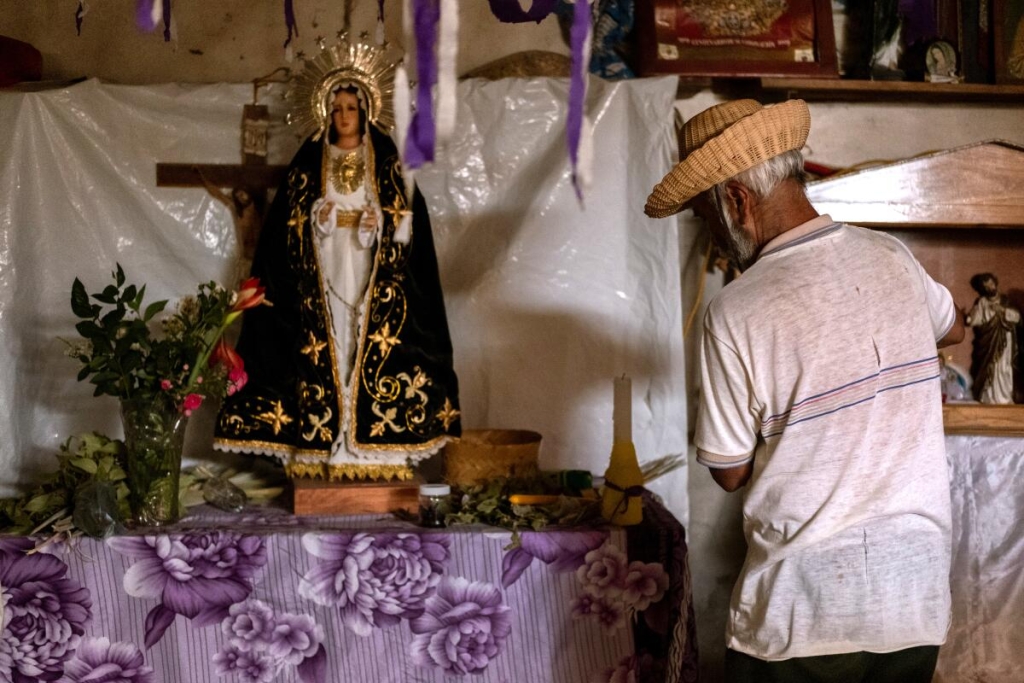
A tradition of ceremonial psilocybin use has continued in Mexico up until the present day. Traditional Mexican mushroom ceremonies, or veladas, are nighttime rituals in which healers (curanderos/curanderas) guide participants through altered states, using specific chants, prayers, and offerings. In this tradition of Mazatec shamanism, as practiced in Huautla de Jiménez, Oaxaca, Catholic imagery often features as well.
The mushrooms are known locally as Ndí Xijtho (“little things that sprout from the ground”), or “holy children”, and are perceived as conscious, intelligent entities.
What to Expect in Your First Mushroom Ceremony: Rituals, Setting, and Experience
Not all mushroom ceremonies are alike. What you experience depends on the country and tradition in which it’s taking place, who’s leading it, and the specific rituals or practices that will be employed.
For example, if you take part in a velada in Huautla de Jiménez, you can expect:
- Recommendations to follow a “diet”, or abstinence from eating certain foods or engaging in sexual relations for some days before the ceremony.
- A sacred journey in which one is meant to enter into the “presence of God”.
- A ceremony led by a healer, referred to as chjota chijne (“wise person”), whose role is often based on lineage, traditional apprenticeship, training, and rites of passage.
- An experience that typically takes place in the healer’s home at night, with only candles used for light at the beginning of the ceremony, which are eventually put out to create total darkness.
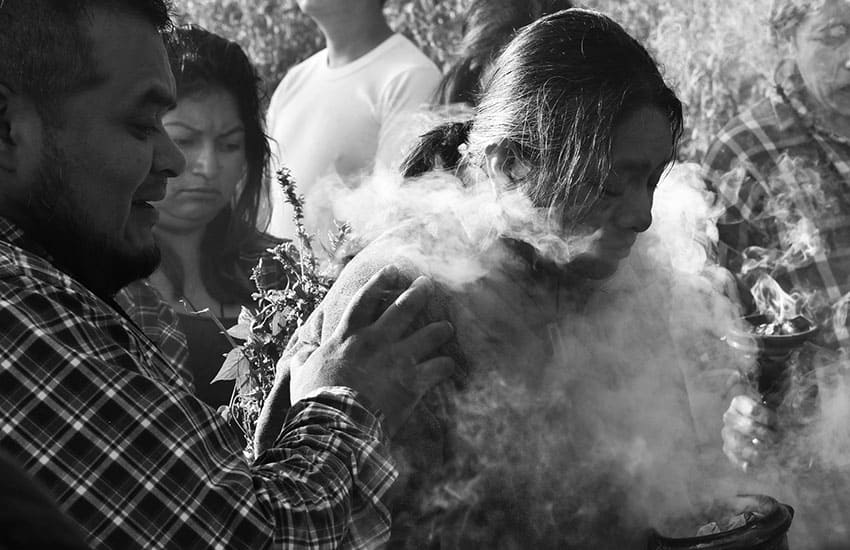
- The burning of incense, copal, or any other aromatic materials for ritualistic cleansing.
- Prayers and petitions, which are made to God, Catholic saints, nature spirits, and deceased ancestors.
- The healer helping you navigate your visions and the healing process.
Mushroom ceremonies outside of Mazatec shamanism may involve some of these elements while including others (such as different religious or spiritual beliefs).
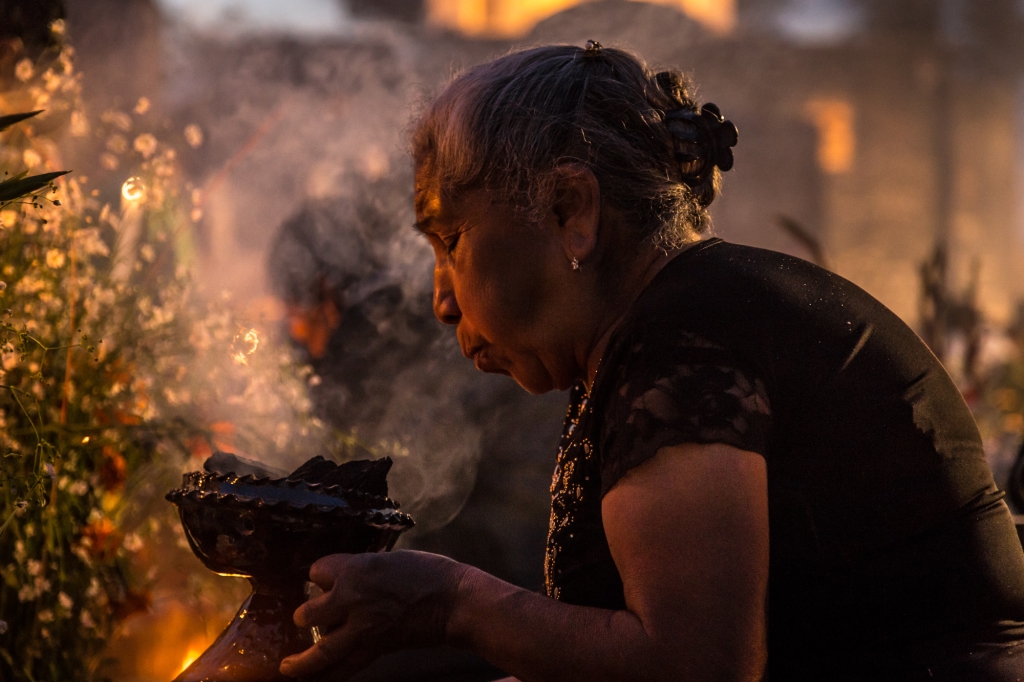
For example, some mushroom ceremonies may occur outside of a specific tradition or religion, but may focus on spiritual experiences, “energetic” healing, or connecting to nature. These may lean into New Age spirituality and can take place in legal and underground contexts. Ideas, practices, and music from different traditions may be used and combined. Guides may burn tobacco or sage, and use crystals, sound baths, or breathwork.
In short, a mushroom ceremony may feature:
- Active guidance from a shaman or healer
- Specific religious/spiritual beliefs
- Traditional music
- Possibly religious imagery
- Intentions that go beyond psychological healing, including physical healing, seeking knowledge of the future, and communicating with deities or spirits
How to Prepare for a Mushroom Ceremony: Mindset, Diet, and Practical Tips
Intention-setting is essential for mushroom ceremony preparation. This refers to what you specifically want to get out of the psilocybin experience, and in a traditional ceremony, it’s something that a shaman or healer will expect you to have ready to share with them.
Common intentions include:
- Healing physical or psychological problems
- Finding answers to questions about the future
- Resolving a conflict or broken relationship
- Diagnosing the spiritual or energetic roots of illnesses
- Communicating with the divine, spirits, nature, or deceased ancestors
Beyond intention-setting, wise preparation for a psychedelic ceremony should also involve:
- Packing comfortable clothing suitable for the season and climate
- Planning all travel well in advance so that there are no stressful surprises regarding transport to the ceremony
- Making sure that you don’t have any physical or psychiatric conditions or current medication usage that could interact negatively with psilocybin
- Getting enough sleep in the weeks before the ceremony, so that you feel physically and mentally rested
- Practising mindfulness and spending time in nature in the weeks or days before the experience, so that one feels calm before the ceremony
- Eating a healthy, balanced diet
- Preparing for the unknown: the experience may not fit one’s expectations or preconceived notions
- Adopting an attitude of humility and a willingness to surrender
- Being open to a potentially difficult experience at times, as well as the potential insights this may involve
What to Bring to a Mushroom Ceremony: Essential Items for Comfort and Support
It’s wise to bring personal belongings that help to create a “container” for the experience. These are any objects associated with personal or spiritual meaning, safety, comfort, or familiarity. The goal is to create a feeling of security, making it easier for one to surrender to the experience. Potentially useful items to bring include:
- A water bottle so that one can stay hydrated throughout the experience
- A journal and pen to record any important thoughts, emotions, or insights immediately after the experience
- Pictures of loved ones
- An item from childhood
- Special jewellery
- Sacred objects such as small ornaments or statues, sacred texts, images of deities or religious figures, prayer beads, or symbolic stones
How to Stay Calm Before a Mushroom Ceremony: Emotional Preparation and Grounding Techniques
Feeling ready to surrender to the wide array of psychedelic effects that can occur often involves emotionally supporting yourself before the ceremony.
We’ve already seen how preparation matters in the weeks and days leading up to a mushroom ceremony, but it’s also crucial to support yourself on the day of the ceremony, as this is often when nerves are at their highest.
To calm any nerves or anxiety before a mushroom ceremony starts, you can try a range of soothing and grounding techniques:
- Body scan: focus on physical sensations from head to toe
- Light stretching or yoga
- Deep breathing
- Progressive muscle relaxation (PMR): tense and release muscle groups starting from the feet up to the shoulders
- Listening to calming music
- Wishing oneself to have an insightful and beneficial experience
How Long Does a Mushroom Ceremony Last?
The effects of psilocybin typically last 4-6 hours, although in clinical trials, some participants experience effects up to eight hours after ingestion.
Mushroom ceremonies last longer than the acute effects of psilocybin because, before ingesting the mushrooms, time is spent:
- Preparing the mind, in which participants reflect on, write down, or discuss their intentions
- Performing “cleansing” rituals where healers may burn tobacco or incense to purify participants’ bodies
- Preparing the physical space, making it safe and comfortable for participants
- Welcoming participants into the space with music, chants, or prayers
- Honoring the mushrooms and journey ahead before consumption
- A ritualized form of consumption, in which the healer offers the mushrooms – raw, with honey, or as a tea – to each participant
After the effects of psilocybin wear off for ceremony participants, the ceremony is then formally brought to a close, often with a prayer to pay respect towards and thank the spirit world. The ceremony may also end with a closing circle to reflect on the experience along with a communal, light meal.
The Mazatec velada is a full-night affair, beginning at night and ending at dawn. The whole ceremony can last up to 10 hours. While the acute effects of psilocybin don’t typically last more than six hours, a traditional Mazatec mushroom ceremony is not considered finished until dawn.
Outside of the Mazatec context, in more New Age settings, mushroom ceremonies may last a similar or shorter amount of time, and they may also begin at a different time, too, so not necessarily finish at dawn. Indeed, some mushroom ceremonies are designed so that the effects wear off in time for participants to be able to sleep as normal.
What to Know About Integration After a Mushroom Ceremony
The term “integration” does not exist in traditional mushroom ceremonies as it does in non-ceremonial psilocybin retreats or New Age mushroom ceremonies. Rather than there being a discrete, formalized stage of integrating psychedelic insights or visions, the healer simply closes the ceremony at dawn.
After a traditional mushroom ceremony, a “diet” is often advised, involving abstinence from alcohol, pork and red meats, spicy food, black beans, and sex, lasting anywhere from 4 to 53 days. The intention here is to honor the mushrooms and secure the physical and spiritual healing received during the ceremony.
This contrasts with the Western concept of integration, in which participants process their psilocybin experiences for the purpose of psychological insight and improving mental health. This might take the form of a whole day after the dosing day, dedicated to group discussion and self-reflection, or several one-on-one sessions with a trained psychotherapist. In modern retreat and therapy settings, there are also usually no recommendations to follow any particular diet to help with integration.
As part of a traditional mushroom ceremony, the healer takes a more active role in diagnosing your problem or confirming what the mushrooms revealed, as well as providing specific prescriptions to help you, such as prayers, offerings, or community tasks you should engage in. Modern psilocybin retreats and therapy, conversely, tend to take a more non-directive approach, allowing participants to arrive at their own insights and conclusions.
How to Decide Whether a Mushroom Ceremony is Right for You
A mushroom ceremony is likely right for you if you would rather have a ritualized experience involving traditional music, singing, and spiritual beliefs and practices. For many people, the ceremonial context helps to facilitate spiritual experiences, and specifically the kinds of experiences they’re interested in, such as connection to the divine and spirits.
However, a mushroom ceremony may not be right for you if you want a more metaphysically and spiritually neutral experience, as well as a non-directive approach. You might be interested in “spiritual” experiences, but not those framed within a specific framework. For example, experiences of interconnectedness, unity, connection to nature, and communal bonding often take place in modern psilocybin retreats and can benefit people regardless of their religious or metaphysical beliefs.
If your main motivation is psychological insight, healing, and growth, then psychedelic therapy or a modern psychedelic retreat could be the ideal choice. However, if these benefits are just one potential outcome you’re interested in, and you’re curious to see what unique experiences and benefits a traditional mushroom ceremony can offer, then participating in the latter could be worth the commitment.