Psilocybin Mushroom Ceremonies: History, Safety, and Ethics
Explore the history, safety, and ethics of psilocybin mushroom ceremonies, including Indigenous traditions, modern practices, and cultural responsibility.
A Complete Psilocybin Mushroom Ceremony Guide
Psilocybin-assisted therapy has hit headlines over the last several years, thanks to the mounting number of clinical trials proving its therapeutic potential for conditions like depression and end-of-life anxiety.
But the ritualistic use of “magic mushrooms” doesn’t just go back decades, or even centuries. Some argue that these mushrooms have been part of sacred human healing and divination rituals for millennia.
Today, Indigenous cultures still exist that practice traditional psilocybin mushroom ceremonies. In Mexico, communities such as the Mazatecs and Zapotecs continue to hold these powerful rituals, rooted in ancestral wisdom of how to use sacred mushrooms to support mental, physical, and spiritual healing.
What really happens inside these ceremonies? And how can we engage with Indigenous traditions in a culturally responsible way?
In this article, we’ll dive into:
- The origins of psilocybin ceremonies
- Traditional Indigenous mushroom ceremonies in Mexico
- What really happens inside the ceremony
- Safety protocols in a legitimate mushroom ceremony
- The rise of New Age mushroom ceremonies
- Cultural responsibility and mushroom traditions
The Origins of Psilocybin Ceremonies
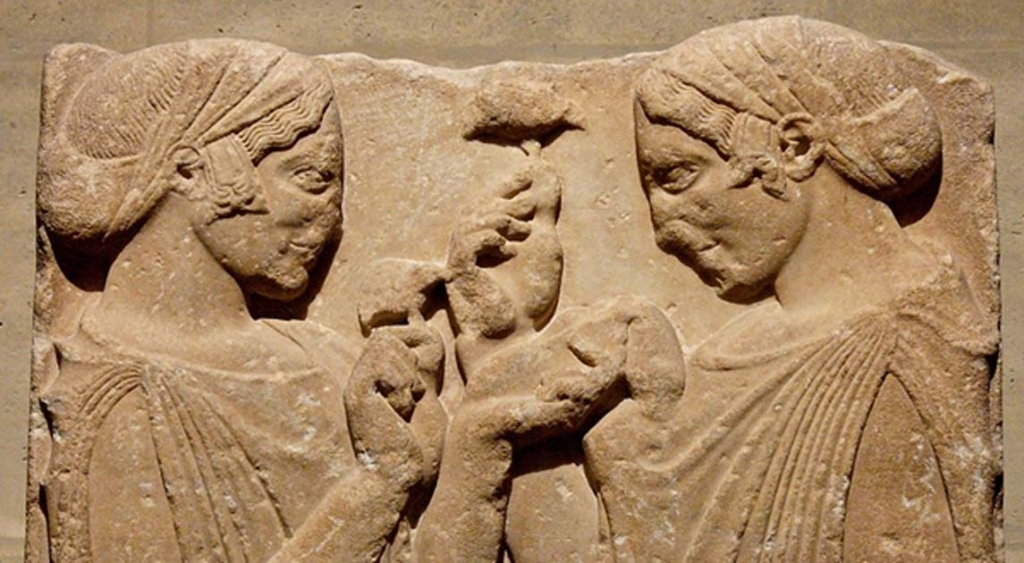
Evidence suggests that humans have been using mushrooms in rituals since ancient times. In the Guatemalan highlands, archeologists have uncovered stone sculptures shaped like mushrooms, with human and animal faces carved on the stems. Researchers suspect that they were a large part of Mayan culture within their religious ceremonies, where hallucinogenic fungi played a major role.
In Spain, Psilocybe-like mushrooms appear in ancient pictographs, also alongside large animals, potentially implying shamanic meaning. Archeological excavations in Algeria have also revealed mushroom figures within ancient petroglyphs, which some researchers associate with shamanic ceremonies.
In Mexico, a fifteenth- or sixteenth-century manuscript depicts “gods and sacred entities associated with mushroom rituals” in Mesoamerican culture. Spanish colonial records also detail the Nahua culture’s ritual, therapeutic, and divinatory uses of psilocybin mushrooms.
Traditional Indigenous Psilocybin Mushroom Ceremonies in Mexico
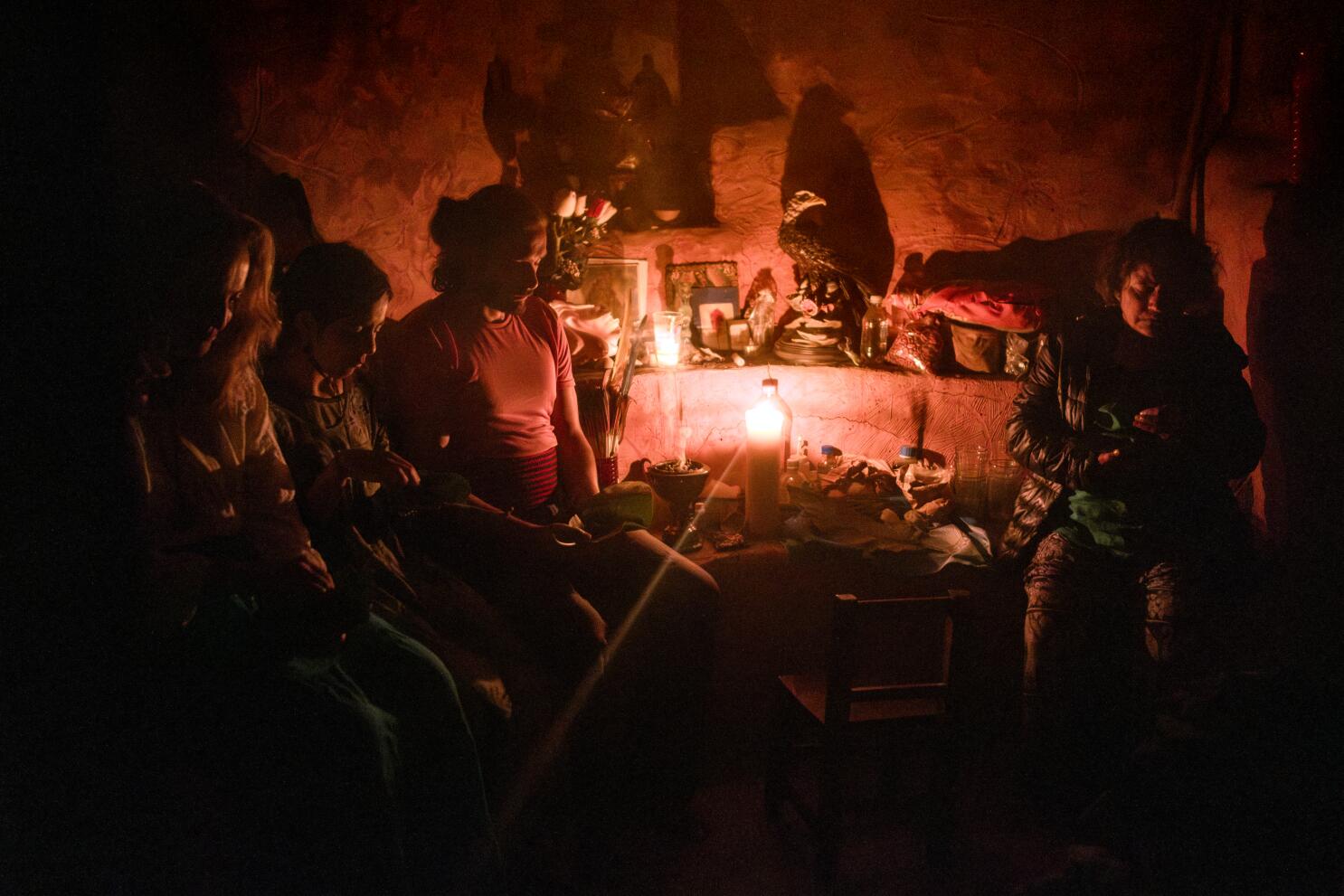
Across several indigenous communities, especially in Oaxaca, Mexico, curanderos and curanderas use psilocybin mushrooms in nighttime ceremonies, often referred to as veladas.
The Mazatecs are the best-known Indigenous group that uses psilocybin mushrooms. María Sabina, the first person to introduce the Western world to psilocybin mushroom ceremonies, came from a Mazatec community in Hautla de Jiménez, a town in the Sierra Mazateca region of Oaxaca.
The Zapotec peoples of Oaxaca are also known to have cultural practices using psilocybin mushrooms, as well as the Nahuas, Matlatzincas, Chatinos, Chinantecs, Mixes, and Mixtecs.
Traditional mushroom ceremonies in these communities are deeply embedded in the cosmovision, language, and ethics of those groups. This annotated bibliography, which looks at 49 texts concerning Indigenous practices with psilocybin mushrooms, established that ceremonies are intentionally held for healing, diagnosis, and/or divination by experienced healers – not for recreation or pure curiosity.
Healers may use the mushrooms to identify the cause of illness and the correct treatment, find answers to problems in their community, and communicate with non-ordinary intelligences, such as saints, ancestors, and elements of nature.
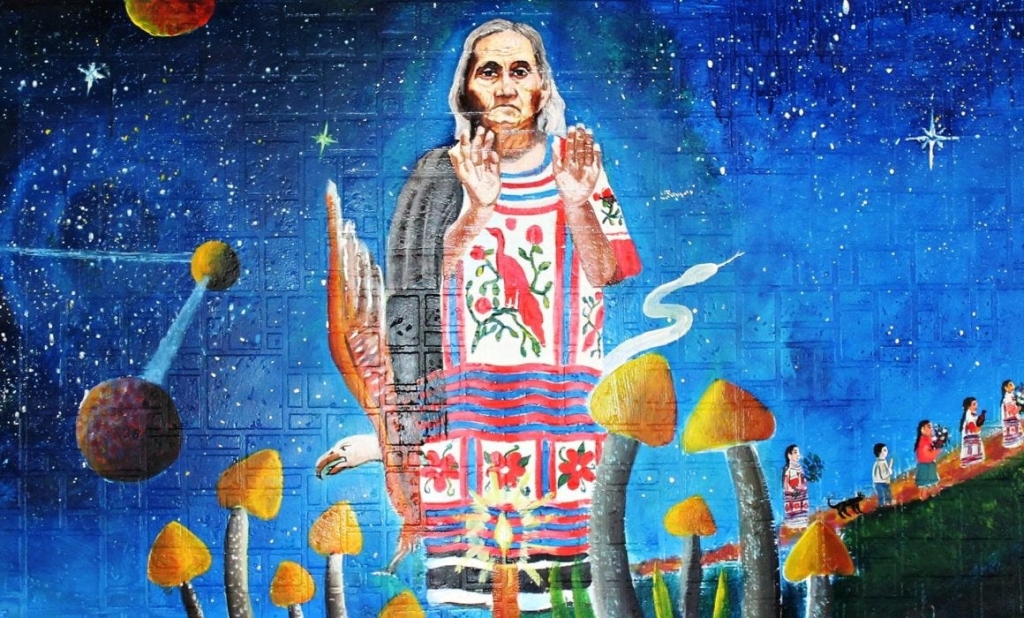
Mushrooms are treated as sentient beings and must be approached with humility and reverence. According to these traditions, using them irresponsibly could result in loss of visions, illness, or going mad.
“The ability to heal and communicate with sacred entities is considered a granted gift and implies a permanent commitment to the community and the divinities,” writes Osiris Sinuhé González Romero, PhD., a researcher on the history and philosophy of psychedelics.
“Among the Mazatec people, these wise people are the chjota chijne…To be a chjine is a whole ritual process that takes years and implies responsibility and commitment.”
What Happens Inside a Traditional Psilocybin Mushroom Ceremony
While mushroom ceremonies might seem mysterious from the outside, they are carefully structured and timed, and include the use of several shamanic tools for energetic cleansing and divination.
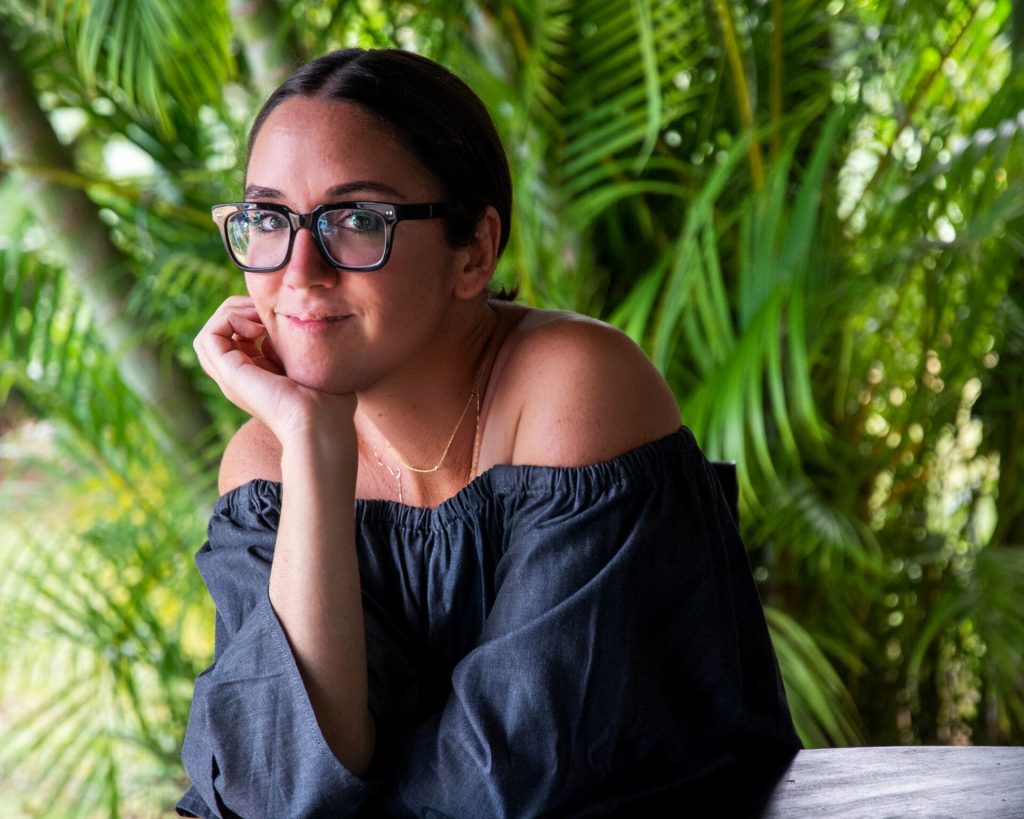
Maria-Heleyna YeiXochipahtli is a French Canadian ceremonial guide who has been working with mushrooms for over 30 years. She apprenticed with Maria Sabina’s daughter, Apolonia, for 13 years until her passing, living and studying for 7 of those years continuously in Huautla de Jiménez.
Maria-Heleyna offers both group and individual ceremonies rooted in the Mazatec mushroom tradition across North and South America and in Europe.
Maria-Heleyna always opens her ceremonies with a blessing with flowers, a candle, and copal (sacred smoke that comes from burning tree resin). “I learned how to read candles and the copal, which tells me a lot about how a person is, who’s in their lineage, or the spirits around the person,” she explains.
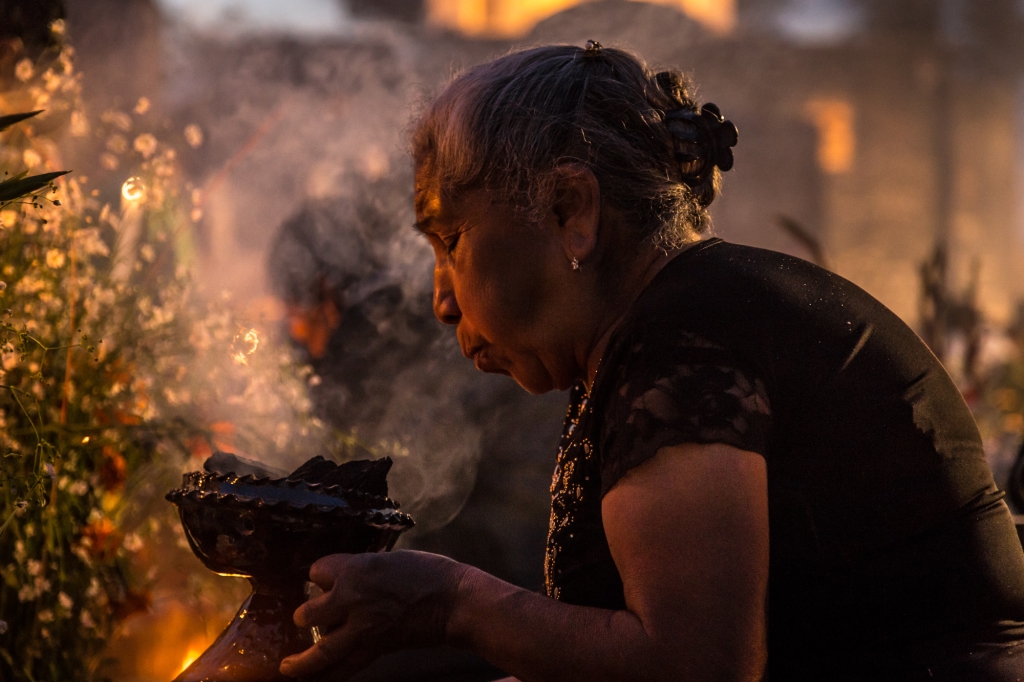
She then offers the medicine, dosing each person intuitively. She passes around a tobacco paste for people to put on their hands and body to “direct the energy of the mushrooms to the extremities of the body” and heal certain parts of the body. She also performs energy cleansings with an egg.
Then follows silence. Maria-Heleyna always does her ceremonies at nighttime when the “energy is quieter,” and neighbors are asleep. “After, I start to do some incantations and prayers. I speak the mushroom language and help them go to where they need to go. I bring a container of light, good energy, harmony, love, and call in angels and guides,” she says.
“I don’t talk much, and the people don’t talk between themselves or touch each other. It’s a very personal, inward journey.”
Participants may experience states of profound emotional processing, psychological insight, and feelings of connection to the universe or nature. Many will also see colorful visions in the form of geometric patterns and spiritual imagery.
“I give personal healing therapy to some of the patients during the ceremony. I cleanse the eyes with the egg, for example, or I do a special treatment on the body,” she adds.
In the morning, when participants wake up, she opens a sharing circle to be able to “wrap things up and put things in context.” Following this circle, she recommends not talking about the experience in the ceremony for 40 days. “No talking, no writing, no painting, keep it completely inside.”
This is an interesting contrast to modern approaches to psilocybin therapy, where processing and sharing your experience in the days and weeks following it is encouraged.
She explains that, “if not, it converts itself into postcards – mental analysis – and you lose the full perspective. It’s really about the art of keeping it for yourself and integrating.”
Safety Protocols in a Legitimate Mushroom Ceremony
As with other sacred medicines and psychedelics, mushroom ceremonial guides should conduct a process of screening and preparation before accepting anyone into their ceremonies.
This is the case especially for ceremonies held with people from outside Indigenous communities, who are more likely to be taking medications or have complex psychiatric conditions that should rule out psilocybin mushroom consumption.
For Maria-Heleyna’s participants, she instructs no substances, alcohol, and sex for four days before and four days after the ceremony. She also has her group participants fast for 24 hours beforehand, and her 1:1 clients fast for 72 hours prior.
She provides ceremony preparation and integration support on either side of the ceremony to ensure folks have clarity around their intention going in, and can safely “land back” into their lives afterwards.
Safety in mushroom ceremonies also requires a careful eye on ethics on the part of the guides.
Psychedelics put individuals in a vulnerable and susceptible state, making these spaces ripe for ethical missteps and abuse. Guides who haven’t undergone proper training, position themselves as a “guru,” violate physical boundaries, and engage in inappropriate relationships with the people they’re supporting are a no-go.
Anyone considering attending a mushroom ceremony should vet the facilitator or guide by asking about their background and training, seeking recommendations and references from people they trust, making sure they are trauma-informed, and following their gut if something feels off.
The Rise of New Age Psilocybin Mushroom Ceremonies
With the recent boom in popularity of psilocybin mushrooms, “New Age” style ceremonies have emerged. Facilitators, often Western, may combine elements from different traditions with modern spiritual tools to create a new kind of guided psychedelic experience.
This might look like using sound bath and crystals alongside tobacco and other sacred smokes. Guides might combine breathwork techniques into the mushroom experience, play the native drum and sing traditional chants, or even offer other medicines in the same ceremony, such as sweat lodge or MDMA.
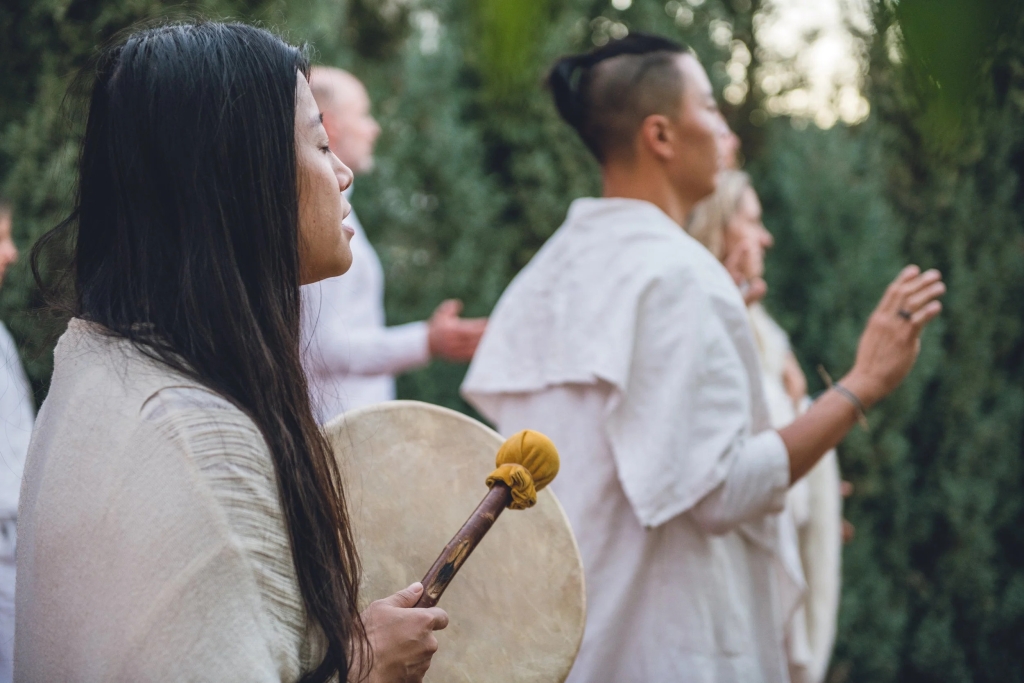
While they may be well-meaning, it’s important to be discerning about facilitators offering mushroom experiences that are not rooted in traditional knowledge or modern clinical practice.
Many of these groups integrate elements from different Indigenous cultures without having truly studied and apprenticed with those communities. For example, they may use sage to smudge the ceremony space without a proper understanding of the plant’s cultural significance or having ever been taught how to smudge properly. This is considered cultural appropriation by many Indigenous folks.
Ethics and Cultural Responsibility in Psilocybin Mushroom Traditions
While guides have a responsibility to be in cultural reciprocity with the Indigenous traditions they practice, participants play an important role in maintaining an ethical relationship to these traditions, too.
Anyone taking part in a traditional mushroom ceremony, or traveling to the Sierra Mazateca in the hope of an “authentic” experience, should reflect on how to do this in a culturally respectful and ethical way.
Following New York banker R. Gordon Wasson’s photo essay on his experience taking mushrooms with María Sabina in Huautla de Jiménez in 1955, tourists flocked to the village with expectations of having their own experiences with the niños santos.
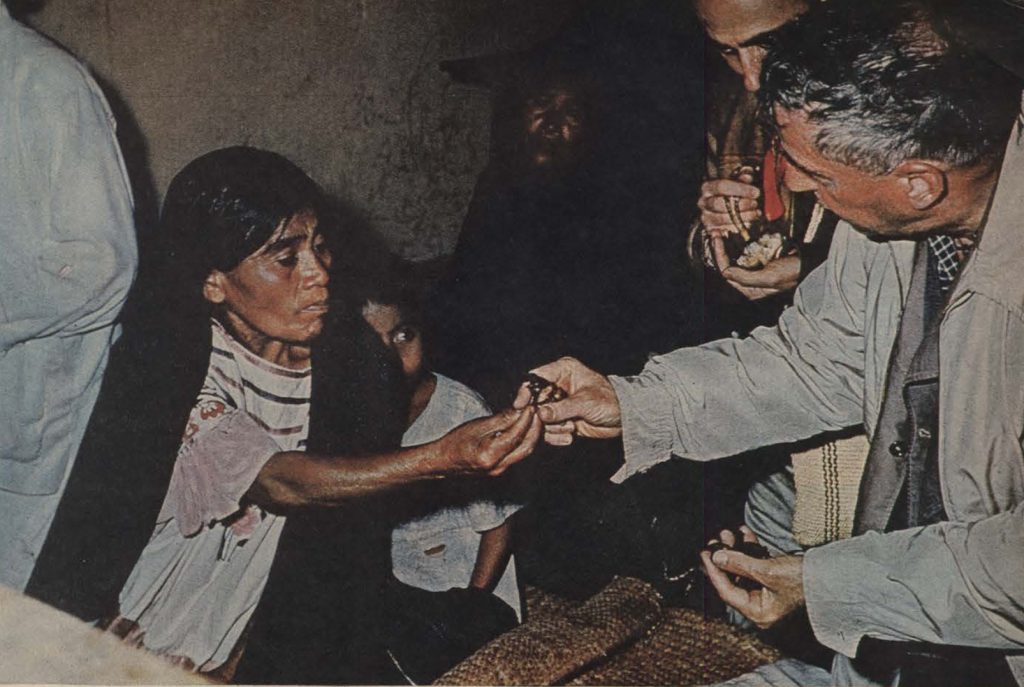
In a panel discussion with Chacruna, Mexican anthropologist Sarai Piña Alcántara explains:
“Since the arrival of the 'güeros,' as gringo tourists in Huautla are called, psychedelic and neo-shamanic tourism has emerged. Since the 1960s, people from different countries, social classes, and academic backgrounds have visited the area in order to spend an evening with the “little ones that sprout” and interact with a “true shaman.” Many arrive in the region with idealized concepts about the Mazatecs and their evening rituals.”
What has followed is the commodification of veladas and a commercial market for mushrooms in the region, explains Sarai. This has led to a shortage of mushrooms over the last 15 or so years. Hauatla is also seeing an influx of neoshamans and New Age facilitators looking to learn ceremonial techniques to offer outside of the region, she adds.
If you’re considering traveling to take part in a traditional mushroom ceremony, you may want to reflect on the following questions:
- Has the guide gone through the proper training and received the blessing to lead ceremonies from the community?
- How might my presence as a visitor affect the local community, economy, and ecology?
- What assumptions or romanticized ideas am I bringing about Indigenous cultures or “shamans”?
- What responsibility do I have after the experience – to the people, the place, and the tradition itself?
Finally, you may also want to consider why you are seeking a traditional ceremonial setting in the first place. Does it come from a genuine desire to build a relationship with the tradition? Or is it due to mere curiosity or the perceived benefit of “going to the source”?
Most Westerners will resonate more with – and get more out of – a modern therapeutic setting that better resonates with their own background, cultural context, and frame of worldview. Traditional ceremonies aren’t necessarily the ‘best’ way of working with psychedelics for everyone. What matters is how you can make sense of these psychedelic experiences within your own life and integrate them afterwards in a helpful way.
Psilocybin Mushroom Ceremonies: A Living, Ancient Tradition
As more than simply being altered state experiences, psilocybin mushroom ceremonies are intentional rituals that call for experienced and responsible guidance. While modern science and New Age spirituality are reshaping how many people encounter psilocybin, these ancestral practices remind us of the importance of intention, respect, and integration when communing with psychedelic medicines.
At MycoMeditations, despite having a non-ceremonial approach to our psilocybin retreats, we hold these Indigenous lineages and their practices in great reverence and gratitude. Without them, we recognize that we wouldn’t have access to the healing power and wisdom of psilocybin mushrooms in today’s world.
FAQs About Psilocybin Mushroom Ceremonies
How are psilocybin mushroom ceremonies structured?
Psilocybin mushroom ceremonies usually open with a sharing of the participants' intentions and an energetic cleansing ritual, such as using copal or tobacco smoke. Then, participants ingest the mushrooms and settle into their space to wait for the effects to begin.
There may be music throughout or only during certain parts, either with live instruments or played through a speaker. Traditional Indigenous mushroom ceremonies may only include songs and chants. Once participants are out of their journey, they have some time to relax and perhaps share what they experienced before closing the ritual.
What safety measures are used in legitimate mushroom ceremonies?
Legitimate mushroom ceremonial guides should always take you through a process of intake and preparation before providing you with mushrooms. This means ruling out any pharmaceutical, medical, or psychological contraindications and providing the necessary support so you feel ready for the experience.
During the ceremony, the guides should show trauma-informed care, ethical practice, and knowledge of spiritual and energetic protection to keep participants safe. Following the journey, they should be available for anybody who may be struggling to integrate or process their experience, or who is feeling destabilized in the aftermath.
Why is integration important after a psilocybin mushroom ceremony?
Integration is crucial after any psychedelic ceremony to ensure you can process the experience and apply the insights you received to your everyday life. This may look like receiving support from integration practitioners, attending integration circles, and taking the time and space to sit with what came up and embody what it means to you.
Who should consider–or avoid–a psilocybin ceremony?
People who are seeking psychospiritual exploration or to improve aspects of their mental health may consider a psilocybin ceremony.
Individuals who are feeling psychologically destabilized or have a history of psychiatric conditions such as bipolar disorder, schizophrenia, psychosis, or borderline personality disorder, as well as those with serious cardiovascular conditions, should not take psilocybin mushrooms. Psilocybin is also contraindicated with certain medications, such as lithium or MAOIs.