

5-MeO-DMT vs Psilocybin: Experience, Intensity & Readiness
Explore differences between 5-MeO-DMT and psilocybin, including duration, intensity, experience, safety, and why preparation and setting matter.
5-MeO-DMT vs Psilocybin: What You Need To Know
5-MeO-DMT and psilocybin are both psychedelics commonly used for therapeutic and spiritual purposes. Yet, while both induce psychedelic experiences and can lead to impressive benefits for users, they differ in many crucial ways.
It’s important to be aware of these differences before using them, as this knowledge is essential to safe use. Understanding these differences can also guide people towards either 5-MeO-DMT or psilocybin, depending on their intentions and preferences. People often experience profound benefits when working with either medicine, although, with common differences due to their unique effects.
Why People Compare 5-MeO-DMT vs Psilocybin
People compare 5-MeO-DMT and psilocybin for several reasons:
Psychedelic Retreat Options for 5-MeO-DMT and Psilocybin
Both 5-MeO-DMT and psilocybin are used therapeutically in retreat settings, which gives users options about what kind of psychedelic retreat to sign up for. For instance, 5-MeO-DMT retreats are popular in Mexico, whereas psilocybin retreats are more common in Jamaica, the Netherlands, Colorado, and Oregon. People may factor in which travel destination best suits them.
Positive Clinical Trial Results
Clinical trials published in reputable, peer-reviewed journals attest to the mental health benefits of both 5-MeO-DMT and psilocybin. However, while both compounds have been shown to alleviate depression, there are many more psilocybin studies, and psilocybin has shown more research-based promise as a treatment for a greater variety of conditions.
This doesn’t mean 5-MeO-DMT can’t be widely applicable as a mental health treatment, but it has yet to show the same outcomes in research.
Type of Psychedelic
Both compounds are classic tryptamine psychedelics, which means they have a similar chemical structure and largely influence serotonin receptors, which mediate psychedelic effects. However, not all tryptamine psychedelics result in the same kind of experience, which is another reason why people compare the effects of the two.
Natural Psychedelics
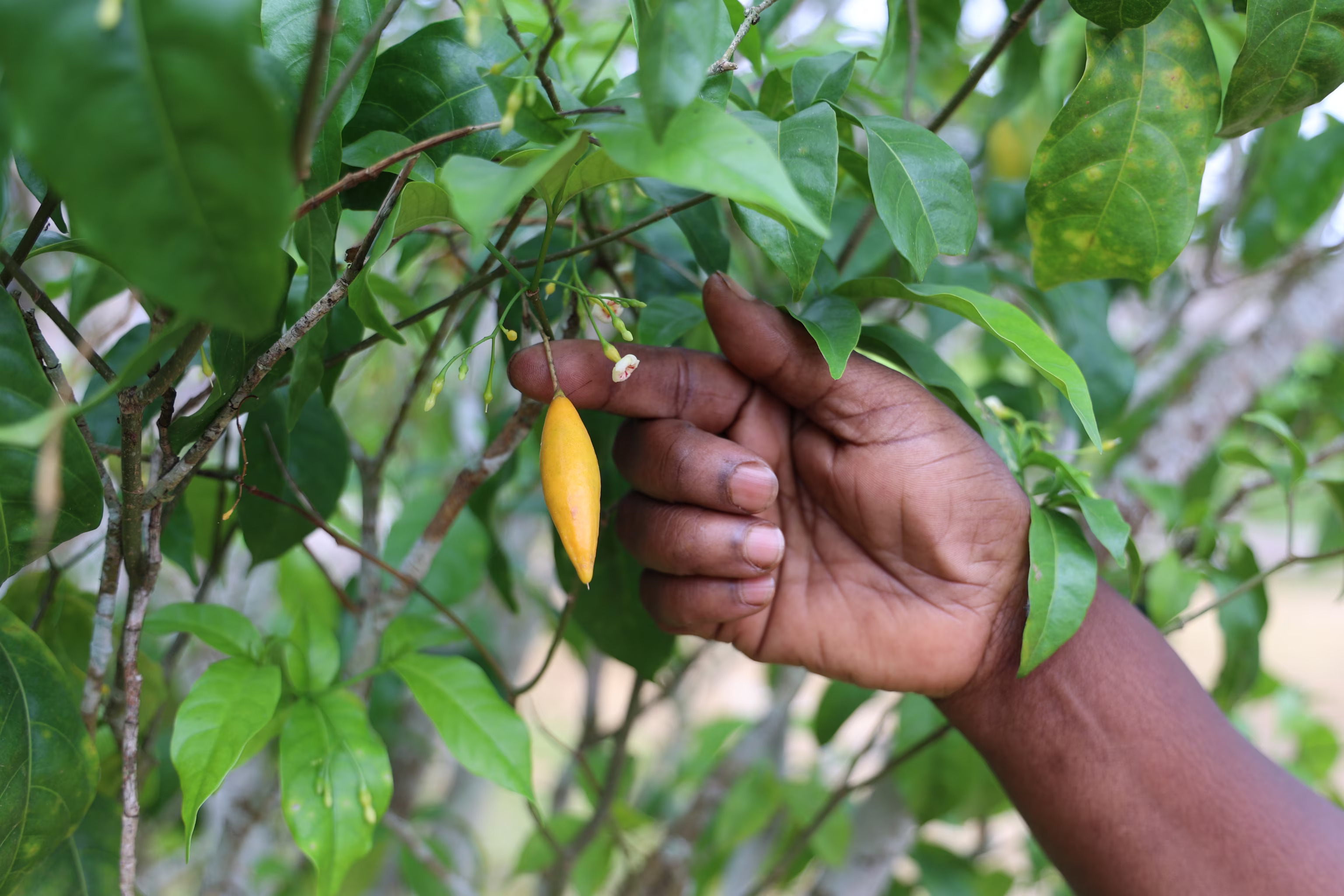
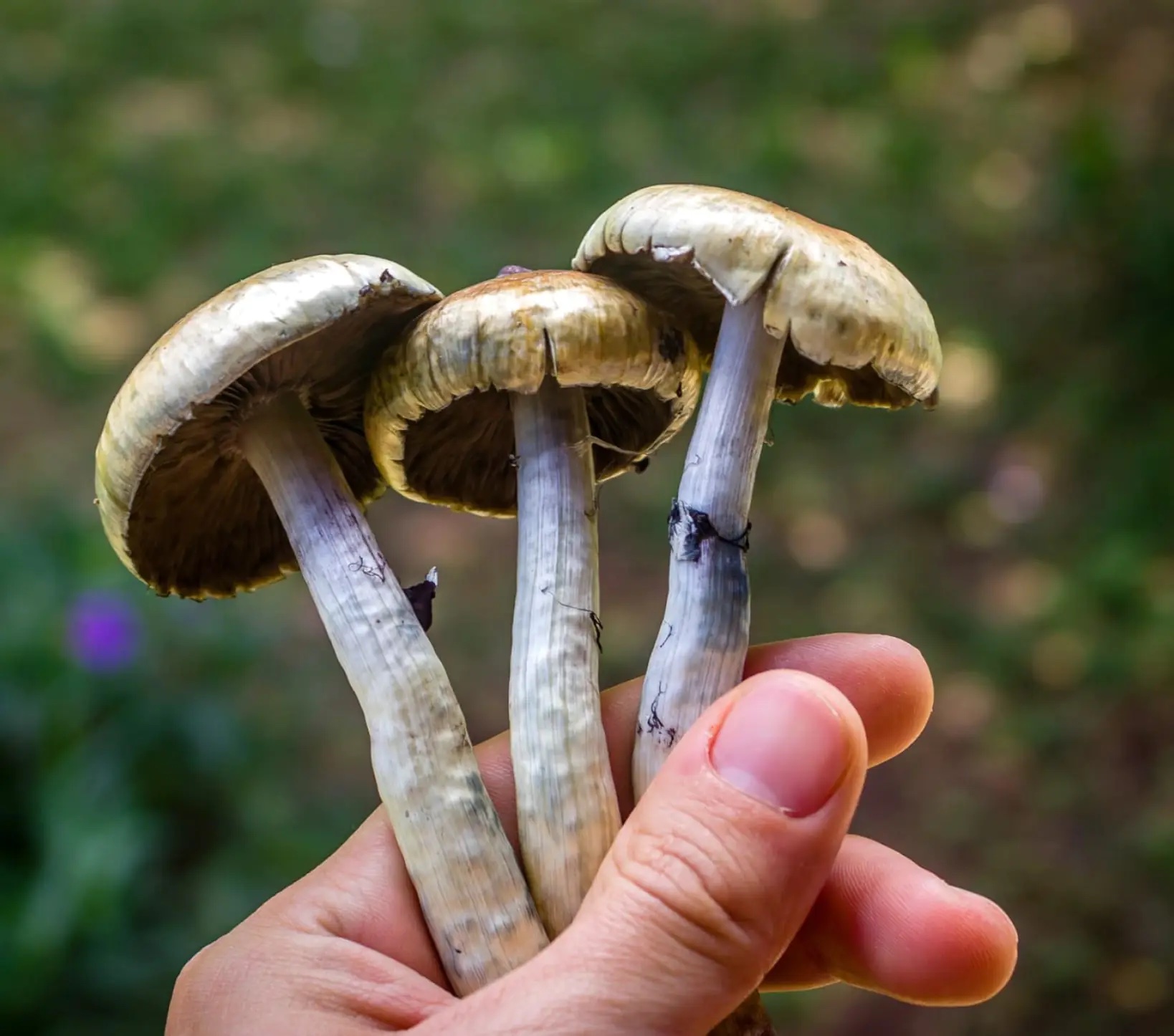
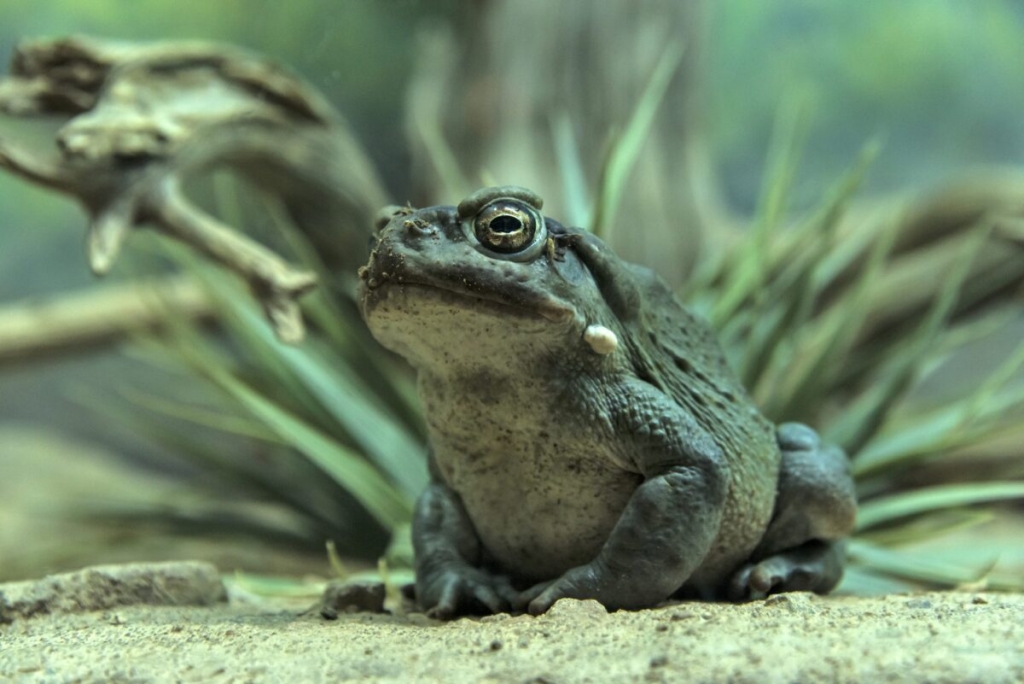
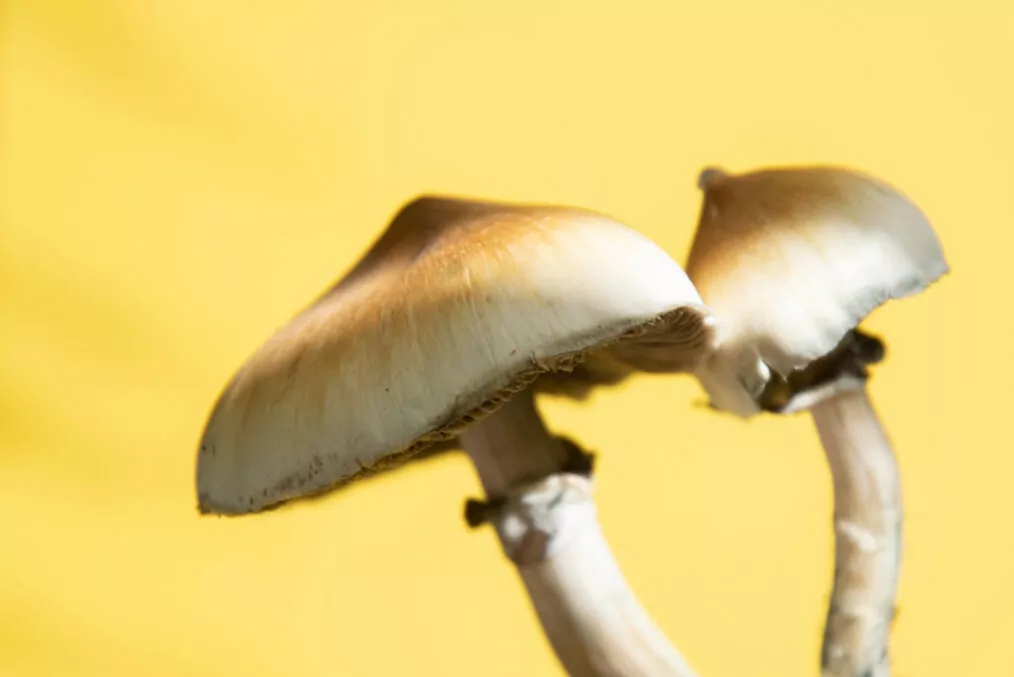
Both substances are found in nature, although from different sources: psilocybin is naturally found in many species of mushrooms, whereas (natural) 5-MeO-DMT is found in the venom of the Sonoran Desert/Colorado River toad (Incilius alvarius, previously Bufo alvarius). Their different natural origins are another way people compare 5-MeO-DMT with psilocybin.
Route of Administration
The routes of administration differ between the two: therapeutic use of 5-MeO-DMT (synthetic/extract) is vaporized or injected intramuscularly (IM), leading to a faster onset and shorter duration compared to psilocybin, which is ingested (as fresh or dried psilocybin mushrooms, tea, extract, edibles, powdered form, or as synthetic psilocybin in capsules).
Cultural and Historical Use of 5-MeO-DMT vs Psilocybin
The cultural associations differ between 5-MeO-DMT and psilocybin. The former has been traditionally used for centuries by Indigenous peoples in the Amazon (but in the form of yopo, a snuff, which only contains minute amounts of 5-MeO-DMT, with most effects deriving from the presence of bufotenin, which is the primary psychoactive compound present).
There is no longstanding Indigenous tradition of using 5-MeO-DMT derived from the Sonoran Desert toad; the effects of smoking its venom were first discovered by Ken Nelson (detailed using the pseudonym Albert Most) in 1984.
In contrast, the ritualistic use of psilocybin mushrooms is thought to be 3,500 years old, and we have evidence of their use by the ancient Maya and Aztecs.
5-MeO-DMT vs Psilocybin: Duration Differences
One of the main differences between 5-MeO-DMT and psilocybin is the duration of the experience. For the sake of comparison, we’ll focus on vaporized/injected 5-MeO-DMT, as that’s what’s typically used in a therapeutic setting.
A typical 5-MeO-DMT experience lasts 15-30 minutes, although some 5-MeO-DMT experiences can potentially last longer.) In contrast to 5-MeO-DMT, psilocybin experiences last 4-6 hours.
The onset (when drug effects are first felt) of 5-MeO-DMT is much faster than that of psilocybin, too, occurring within seconds. After ingesting psilocybin, users can expect to experience the onset of effects within 20-40 minutes.
One reaches the peak of 5-MeO-DMT’s effects very quickly (estimated at 1.5-2.5 minutes, according to research), whereas the peak effects of psilocybin occur 90-180 minutes after ingestion.
5-MeO-DMT vs Psilocybin: Intensity Differences
A commonly cited difference between 5-MeO-DMT and psilocybin is how intense the typical experience is.
The 5-MeO-DMT is often referred to as the most powerful psychedelic, and is often called the “God molecule”. This reputation is due to the fact that vaporization of large doses (e.g., 18 mg) often leads to peak experiences. Researchers note that 5-MeO-DMT reliably induces these sorts of experiences (over 75% of users report “complete” mystical experiences with 5-MeO-DMT).
Very quickly, after vaporization of 5-MeO-DMT, users may feel their body and ego dissolve, reaching a mystical state that is sometimes known as a “whiteout” (in contrast to a “blackout”). This can be like dissolving into a void of pure white light.
Some users have reported a few minutes where they have no memory of the experience.
5-MeO-DMT-induced mystical experiences may be described as a state of “non-dual awareness” (i.e., a state of unity) or “pure consciousness”. Some report a connection to a greater whole, such as the universe or God.
Research has found, nonetheless, that mystical experiences occasioned by 5-MeO-DMT are similar in intensity to those occasioned by psilocybin.
Again, when using high doses and a prepared set and setting, both substances can lead to profound spiritual experiences. However, 5-MeO-DMT offers a much quicker entry into the mystical state.
This can have certain therapeutic advantages, reducing time commitments on the part of both participants and therapists.
However, it’s important to note that this rapid onset requires skill and guidance to navigate this powerful altered state, and complete trust to let go of control and surrender to the unknown.
This is the case with all psychedelic experiences, but particularly so for the intensity of a full dose of 5-MeO-DMT.
The Subjective Experience: How 5-MeO-DMT and Psilocybin Trips Tend to Differ
Unlike psilocybin experiences, 5-MeO-DMT experiences don’t tend to be very visual in nature. They are primarily known for their profound mystical effects: an experience of rapid, content-free ego dissolution, ineffability, and transcendence of time and space. A study published in Cell states:
“Although all three [5-MeO-DMT, DMT, and psilocybin] are serotonergic tryptamines that bind to serotonergic receptors in the brain, 5-MeO-DMT is considered an atypical psychedelic given its much greater affinity for the 5-HT1A relative to the 5-HT2A receptors, which are thought by many to mediate altered states of consciousness caused by classical psychedelics. Indeed, the differential distribution of 5-HT1A and 5-HT2A receptors across the neocortex could likely explain why 5-MeO-DMT does not induce the visual imagery characteristics of other psychedelics including psilocybin, NN-DMT, and LSD.”
Psilocybin, therefore, is likely to induce more intense visual effects (with eyes open or closed), such as geometry, distortions, morphing, color enhancement, and visions. Psilocybin experiences are also often characterized by introspection, personal reflection, important memories, and emotional breakthroughs.
Meanwhile, 5-MeO-DMT experiences often have less personal or narrative content. Instead, it takes people straight into the nervous system to discharge what the body holds there, in addition to non-dual experience of oneness. However, both psilocybin and 5-MeO-DMT can be highly emotional experiences.
Because of the rapid, ego-dissolving effects of 5-MeO-DMT, experiences with this compound may be more challenging than those with psilocybin.
Since the rapid onset may lead to a state of fear or panic – and because 5-MeO-DMT can sometimes induce strong, involuntary physical reactions like shaking, rolling around, kicking, or flailing – it’s essential that facilitators are trained to look after the physical safety of participants.
For that reason, we don’t consider 5-MeO-DMT a starter psychedelic (using it when you’re completely new to altered states).
5-MeO-DMT is an incredibly body-oriented experience, and for those who struggle to connect with their body, it can be a challenging experience to get comfortable with based on its intensity and short duration of time to adjust to.
Researcher Johannes Reckweg notes, “The effects are so strong that the patient or participant is either unconscious or very vulnerable in that moment.” On the other hand, Reckweg points out that “some participants fell into what seemed like a calm sleep”.
Of course, facilitators should have the physical safety of psilocybin therapy participants in mind as well, but in therapeutic and retreat settings, psilocybin experiences don’t often induce such strong physical reactions (although reactions like trembling and shaking can still occur).
Set, Setting, and Support: Why Readiness Matters with 5-MeO-DMT
As we’ve seen, both 5-MeO-DMT and psilocybin in high enough doses can induce powerful peak experiences. When using high doses of 5-MeO-DMT or psilocybin, paying attention to set, setting, and psychological support is of paramount importance.
‘Set’ refers to the mindset before going into the experience: personal readiness, an understanding of 5-MeO-DMT or psilocybin’s unique effects, knowledge of how to handle challenging experiences, and pre-existing mood and feelings of restfulness.
‘Setting’ refers to the factors in one’s environment that can shape the experience, including other people present (if in a retreat setting, for instance), the facilitators, music, outdoors vs indoors, natural features, artwork, objects present, noises present, physical comfort, and the degree of quiet and peacefulness.
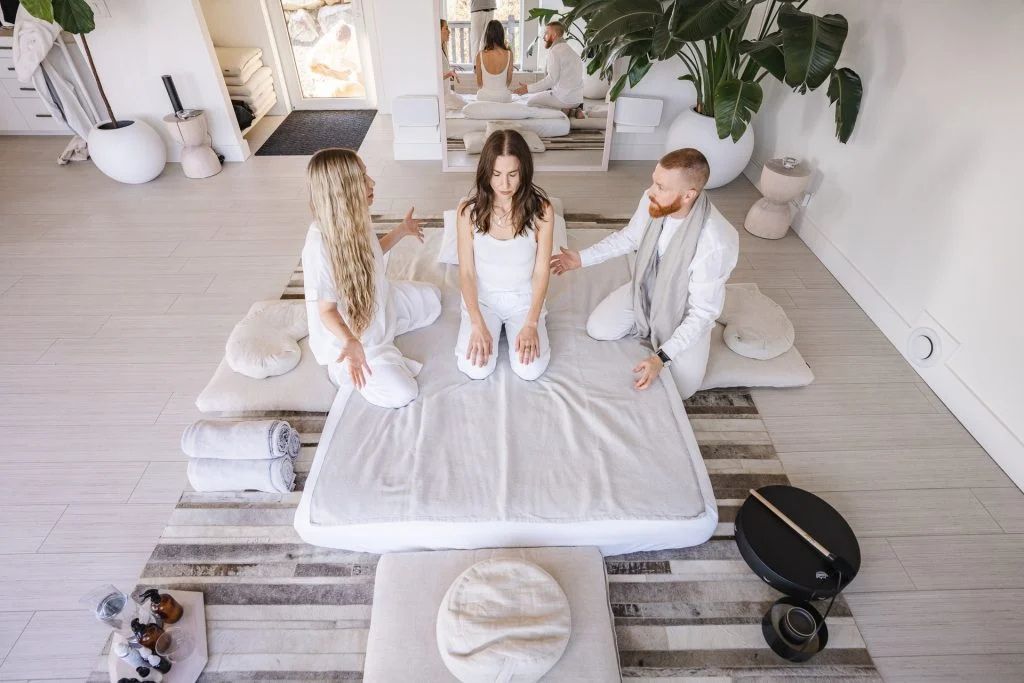
Psychological support is the physical and emotional support one has during the dosing session. This includes nurturing physical touch and grounding from the facilitators (e.g., holding hands or brief, gentle, reassuring hand placement on the shoulder). Support often helps participants feel safe, secure, and supported. Emotional support may include guidance for how to navigate challenging experiences, such as an invitation to “trust, let go, be open”, or offering compassionate care in a moment of vulnerability.
Paying close attention to the different aspects of ‘set and setting’, and having trained, empathetic facilitators supervise 5-MeO-DMT or psilocybin journeys, ensures that these intense experiences happen in a safe container.
Conclusion: Why Comparing Substances Doesn’t Replace Personal Readiness
Regardless of the differences between 5-MeO-DMT and psilocybin, when using either substance, it’s crucial to feel personally ready for the experience. This means being aware of one’s current state of mind and being prepared to have a potentially emotionally intense experience, as well as possibly a mystical experience, which can involve drastic changes to one’s sense of body, self, space, time, and reality.
Approaching 5-MeO-DMT and psilocybin experiences with a high degree of respect and embracing the potential effects that can occur is essential for personal readiness. This is the ideal mindset for surrendering to these experiences and opening oneself up to the full benefits that these substances can offer.
FAQs About 5-MeO-DMT vs Psilocybin
How does 5-MeO-DMT differ from psilocybin in duration and intensity?
5-MeO-DMT is a much shorter experience than psilocybin (lasting 15-30 minutes, instead of 4-6 hours). While research has found 5-MeO-DMT can induce mystical experiences of comparable intensity to those induced by psilocybin, researchers also note that the former tends to induce these experiences more reliably.
Why is 5-MeO-DMT considered more intense than psilocybin?
5-MeO-DMT is considered more intense than psilocybin because of its fast onset and rapid, ego-dissolving effects.
What role does preparation play in intense psychedelic experiences?
Preparation means being aware of (and feeling ready for) the range of effects that both 5-MeO-DMT and psilocybin can induce. This is an essential aspect of surrendering to the experience, so that one understands the range of normal, expected effects of the medicine, rather than a sign of something ‘going wrong’, which may lead to a state of fear or panic.
How does integration differ after short vs long psychedelic experiences?
Integration for a short-acting but intense psychedelic like 5-MeO-DMT often involves rapid, focused processing, occurring as one returns to baseline. This might involve talking or journaling about the experience as soon as one is able to do so, so that one doesn’t forget the most important aspects of the peak experience. This is because memories and insights from the 5-MeO-DMT can fade quickly.
In contrast, longer psychedelic experiences, such as those induced with psilocybin, often require sustained, in-depth integration, lasting weeks or months. Nonetheless, many people find that 5-MeO-DMT experiences, beyond merely recording what happened, also require longer-term integration.
What safety factors should people understand when comparing psychedelics?
When comparing psychedelics, important safety considerations include differences in dose (e.g., milligrams for 5-MeO-DMT and grams for dried psilocybin mushrooms), duration, intensity, the training and experience of the facilitators, legality, and the quality of the clinic or retreat offering the experience.